GEEKERY  
ADVENTURE  
CONTEMPLATION  

20150218

LDS Public Affairs

This past Sunday, I received and accepted a new calling: Secretary to the (horrible acronym warning) NYMMPAC, which stands for New York Metro Multistake Public Affairs Council.  It covers 3 Coordinating Councils, or 13 Stakes and 131 units.

Generally speaking, the idea of church public affairs makes me a little queasy.  In an ideal world, the good works of the church should speak for themselves and we should have no need to influence public opinion of us.  That said, I think the public affairs groups aren't there solely to bring about good press—the director emphasized to me that "public affairs" is really an unfortunate name, since there's much more to it than that.  But, prior to this, my perception of Public Affairs was the folks who force members to wear yellow Helping Hands vests and do photographed service activities.  Or, more recently, PA was represented by the token woman that introduced the Apostles for the press release on religious freedom.

So why did I accept the calling?  Part of it was certainly ego.  But another big part of why I accepted is that I was recommended for the position because of my strong opinions.  This means that they knew what they were getting, and I had license to be myself.  I also warned them that I have a blog.

I have a friend at church who is on the NYMMPAC, and she and I have had regular hallway discussions on church issues (in lieu of attending Sunday School).  She acknowledges that some aspects of Public Affairs and popular LDS culture need to be improved, and has been working to make things better.  The idealistic optimist in me says: now I can be a part of that effort!

While I do need to keep some things confidential, I hope to keep a record of some of my public affairs experiences, to improve transparency, define the role of public affairs a little more concretely, and to prevent me from drinking too much cultural kool-aid.

Update: Since writing this post, lots of people have told me about great PA experiences, like:
Folks have also pointed out that PA is one of the few areas in the church hierarchy where women have impactful roles.  Now I'm feeling pumped.

20150208

ice skating as a waltz

Yesterday, NWC and I went ice skating on the three frozen bodies of water in our area—a tour of the ponds and lake.  The muscles in my feet usually get tired after about 40 minutes, so the was a nice way to take advantage of the outdoor ice skating opportunity without wearing myself out.  As soon as we got tired, we took a break by switching to the next one.

I'm still very much a novice when it comes to ice skating.  This season I've made it my goal to practice two things: stopping and skating continuously (instead of two pushes and parallel gliding; repeat).  My biggest problem with smooth skating was speed; I could skate continuously by constantly pushing off one foot then the other, but then I end up going far too fast and losing control.

Yesterday I finally made a break through on skating continuously: I turned it into a waltz.   I was watching a slow experienced skater, and started to count how often she pushed off, and it was every third beat.  Once I found the rhythm and turned it more into a dance, it was like flipping a switch.  Now to figure out how to stop properly...

20150204

Allison's Law: "The mess has to go somewhere"

When I was a growing up, we had a standard of cleanliness in our house called "daddy-clean." My brother and I were asked regularly to clean are rooms, like most American children, but when we were done, mom would always ask: Is it daddy-clean?  This usually resulted in a second round of cleaning to make sure everything was out of sight.

There was a flaw to this paradigm, however, which was that daddy-clean only applied to things that were visible.  Thus, I learned the art of shoving everything under my bed, which had a convenient bedskirt to hide everything.  Toys, clothes, paper; everything went underneath.  When under-the-bed got full, the closet was my second choice.  Eventually my parents found out about this, due to an abundance of random objects poking out, but they allowed me my secret messes so long as they didn't get in the way of finding important things, which they occasionally did.

Nowadays my messes look a little different.  In addition to paper, I have more abstract things like source code.  And my experience growing up has taught me: the mess has to go somewhere.  Most of the time, this is just a trade off between different aspects of cleanness of an end product and time, but it applies in so many cases.

Consider the process of creating a user interface.  The mess can go into the source code; everything hacked together in an ugly mess underneath.  The mess could also go into the UI itself: bad design with beautifully easy implementation.  Or, the mess could be absorbed with lots of time to have pretty code and sleek presentation.

Or consider a different piece of software, like an operating system.  The mess could go into the kernel, into the user experience, or passed on to developers for that platform.  Or, again, the mess can be absorbed by lots of time and effort.

In my experience, the mess of the very pretty Mac OS is passed on to developers.  D3, with its steep learning curve and beautiful graphics, also passes the mess to programmers.  Easy-to-use and powerful libraries like ggplot2 for R probably put the mess in some combination of the under-the-hood code and time.

I've also been thinking about this in terms of (machine learning) model development.  Usually elegant models require an intense amount of time to polish into their perfected forms.

It's not always the right choice to absorb mess with time; sometimes a project isn't worth doing exceptionally cleanly.  I think it is always worth it, however, to consider where your mess will be going in order to make a measured choice.

20150130

on lady tech events

I recently had a colleague ask me about women in tech events, and I wanted to adapt my response into a blog post.

Women in tech events and long-term mentoring can be very fulfilling, especially when the audience is narrow enough. That said, I'm always hesitant about female tech mentoring because it seems like there is so very much of it, both soliciting mentors and mentees, so it's easy to commit to more than you actually want to do.

It's important that every individual takes a step back asks themselves: How much time do I want to dedicate to networking and mentorship? What kinds of interactions are most valuable to me? (What have I enjoyed about other events I attended?) Plan the big picture first, and then use that as a roadmap to make the smaller choices.

In the end, these are personal choices about you and your career. For me, going to WiML every year is enough. But other people might want more support or networking. Still others might not care at all about things like this—again, this is totally personal. It also varies depending on where you are in your career, because our needs and preferences evolve with time.

As a one-off, these kind of things won't make or break you, but it's the aggregate of multiple events over your career. If you're not certain about a particular event, it might be worth going, just to see how fulfilling these kinds of events are to you, so you can make informed choices going forward.

20150111

evening art project

I've been trying to do more artistic things lately—it's not really a new year's resolution, but it stated during the holidays.  After a few frustrating half-finished things, I finally completed a piece this evening.  NWC wanted me to name him, and after he refused both Seahorse and Seahorsie, I went with Herbert

Hebert.

20150108

How to contact an academic

Ever since I started graduate school, I've gotten the occasional academic spam from applying students.  These folks are obviously trying to be clever by automating their emails, but usually people see through it.  I also regularly get emails from people who want to work for my advisor, or from friends and strangers who want advice on applying to grad school.  It feels as though I've repeating myself recently, so I'm collecting all of my advice about contacting professors (or other academics) into a blog post.

1. Keep it brief

Nobody likes a long rambling email, except maybe your mom.  At the most, attach or link a CV/resume.   A general template is to introduce yourself, express why you're interested in their work, and then tell them what you want.  Each of these can easily be one sentence, maybe two.  If you want to put lots of effort into this email because it's really important to you, don't just make it longer.  Instead, take the time to craft your words so they read quickly and easily.

2. Have a purpose / Make it easy for them to respond

Think about why you're writing to this person.  Is it because you want to be noticed in graduate applications?  If that's it, just skip the email because it probably won't do anything.  You should only email folks when you have a purpose.  Examples of good purposes: you want to be a research assistant, want to join their reading group, would like to sit in on a group meeting, or would like to schedule a meeting with them (e.g., to get their advice on a project).  If you make it clear what you want, and show that it isn't that much work for them (15m of their time or a two-line email response), then they're much more likely to respond positively.

Now, contrary to what I just said, you can still write to a professor even if you just want to be noticed for graduate school applications.  You just need an additional reason, like one of the examples I mentioned above.  You should simply say that you're applying, would love to join their research group, and then give them that extra something else that allows them to respond easily, like asking if you can stop in on their group meeting or if they could put you in touch with one of their current students.  Simply saying "I'm applying to grad school at your university" is usually a waste of everyone's time, yours included.

If you don't actually need them to respond, you can just say so, but sometimes it's implicit.  "I just wanted to thank you for your great work on ABC; I've used it for XYZ and thought you might be interested in seeing the results at <link>."  Regardless of whether or not you want a response, make it clear why you're writing to them so that they know what to with the email; this is just general email etiquette.

3. Do your homework

Read their papers.  Download and run their code.  This takes a bit of work, but you should only be contacting a handful of people anyway—probably under a dozen if you're applying to graduate school, or maybe three if you're looking for a research position at your current institution.  If reading their papers is intensely painful for you, then maybe you shouldn't be writing to them.

You also want to avoid looking silly.  You shouldn't be asking them questions that they've answered recently on their blog, or asking for their latest reading group paper that's posted on an easy-to-find publicly available schedule.

The last reason you want to do your homework is that you don't want to look like a bot.  Consider the difference between "I like your research in machine learning" and "I like your research on visualizing topic models".  The first could be sent to thousands of people, but the second could only be sent to a handful.  If the content of your email is sufficiently personal, it's obvious that you're a human being that might be worth responding to.

Summary

Keep your messages short, sincere, and specific.  These seem like good guides for general correspondence as well.

20141227

Christmas at home

This year we celebrated Christmas without much fanfare.  We didn't travel, we didn't have a tree, and we didn't even bake cookies.  I did make two nice dinners for Christmas eve and Christmas day, but they were still low-maintenance as far as holiday dinners go.  I missed seeing family, of course, but it was a very relaxing way to spend the holiday.

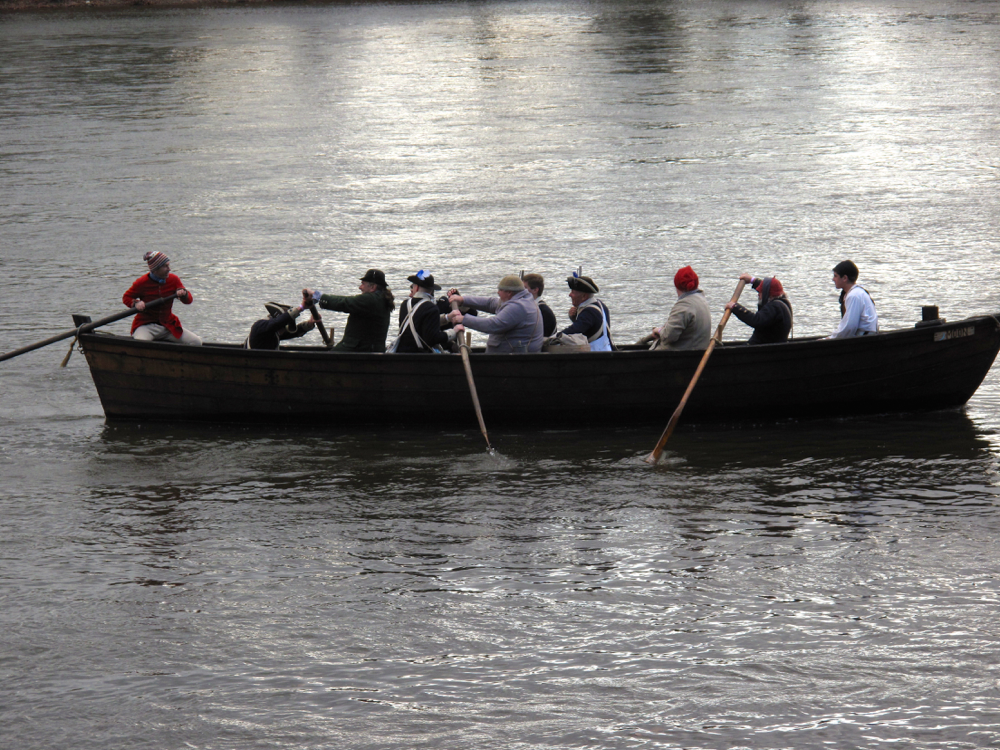
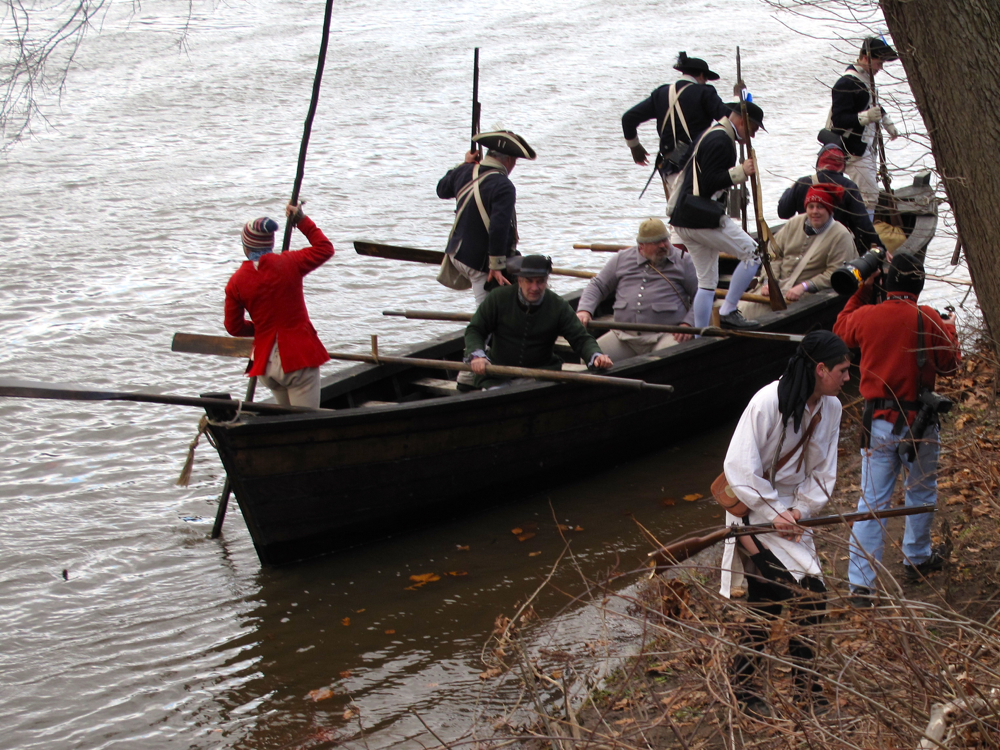
We did go see the reenactment of Washington's crossing of the Delaware, which was cute, though the actors might shudder to have that word applied to them.  When the first boat crossed, it looked like they were struggling for a bit against the current, but they made it.  One of the highlights was an actor not wearing any pants, which was hilarious.

We bullied this guy into taking a picture with us.
Can you see the fear in his eyes?

The struggle.

Mr. Nopants has disembarked.

The Saturday before Christmas, we went to the mall briefly.  It was a very bad idea; never go to the mall between Thanksgiving and Christmas.  Never.  It was very crowded, bustling with people walking everywhere.  In the midst of this, I heard a violin.  I thought I was going a little mad as I stopped in place and turned to NWC and started muttering about how it sounded like there was a live violinist in the mall.  As we kept walking, it got louder and I kept alternating between jabbering about it and enjoying the calming peace it brought amidst the swarms of people.  Eventually, we made it to some kind of indoor central plaza, and there he was, playing along with a subtle recording.  It was very sentimental to listen, as my father plays his violin much more during the holidays.  I got a little teary and just stood there for a minute, like calm in the eye of a storm.  Eventually we moved on to decide that we didn't want to deal with the lines, but we got to pass him again on the way out.  I was glad to have experienced his music, and oddly enough, the contrasting unpleasantness of the mall probably made it all the more memorable.

20141209

WiML 2014 workshop

Yesterday was the culmination of many months of planning for the annual Women in Machine Learning workshop.  I think it will easily be my favorite part of being up in Montreal for the duration of NIPS 2014.

We had an amazing program; our invited speakers were Carla BrodleyTina Eliassi-Rad, Diane Hu, and Claudia Perlich with Finale Doshi-Velez giving our opening remarks.  Our student oral presentations were thought provoking, and the breadth of our poster session was immense.  Corporate sponsors sent great representatives, and the round table mentoring session enabled some amazing discussions.  I feel like I can through positive adjectives at basically any aspect of the event, from our volunteers to the food.

I loved working with my fellow organizers Marzyeh Ghassemi, Sarah Brown, and Jessica Thompson.  It was an amazing experience and I'm very glad to have had this opportunity.

Thanks to @kmkinnaird for her photography!